The World's Most Advanced llama.cpp? A Review of The Tom/llama-cpp-turboquant Revolution.
We take a look at one of the World's most Advanced LLM's that are enabling these world class models to run on small GPU hardware!

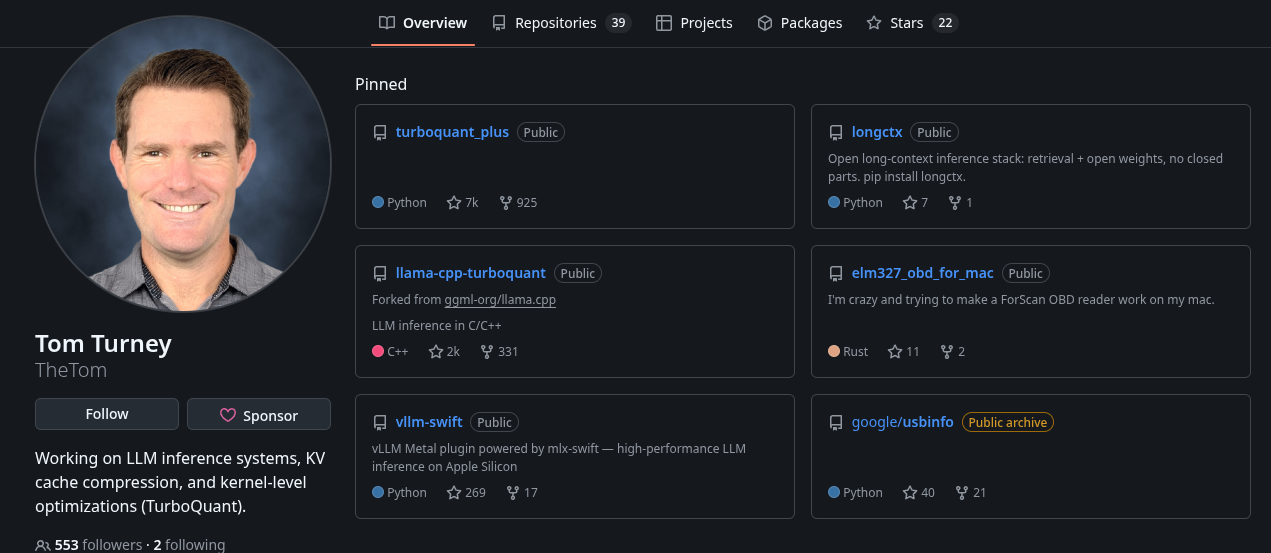
Tom’s llama.cpp fork is, at the time of this writing, one of the world’s most advanced inference engines. Built on the base llama.cpp repository, it is one of the few engines that simultaneously supports TurboQuant, MTP, and MoE. We want to highlight the dramatic contributions of ‘TheTom’ and the enormous effort invested in this project. We have simplified the explanation below so that readers new to the topic can follow along.
 TheTom
Let's review.
- Large language models (LLMs) initially relied on 16-bit (FP16) representations for their key-value (KV) caches. These were later reduced to 8-bit formats, and further quantization techniques enabled even greater memory savings. However, aggressive quantization often led to issues such as context loss, increased hallucinations, or nonsensical outputs.
- An additional challenge was the quadratic (not logarithmic) growth in KV cache memory requirements as context length increased during inference. This made long-context processing extremely demanding, often necessitating expensive high-end servers equipped with large amounts of high-bandwidth memory (HBM).
- The introduction of TurboQuant (from Google Research) represented a major advancement. This vector quantization technique dramatically reduces KV cache memory usage—by a factor of at least 6×—while preserving model accuracy and mitigating the previous scaling issues. For the theoretical paper, see: https://arxiv.org/abs/2504.19874.
- The problem was nobody had integrated TurboQuant into a localLLM inference engine - that is until Tom did it on his fork!
What does that mean?
- When these new vector quantization algorithms were introduced it enabled a giant boost in context lengths (how long a LLM can read and regurgitate.)
- So what once required a $250,000 server could now run on a house GPU like a 3060ti or a 4080, 3090.
- Now where you once could only have small 'paragraphic' conversations with your LLM by implementing Turboquant you could fling entire code bases at your local GPU and it can handle it!
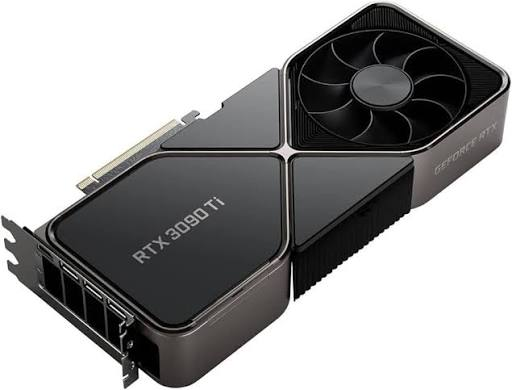
It just Gets Better, MoE, MTP, and TurboQuant, with MCP Dramatically Empowered it Even More.
- Turboquant allowed your LLM to have really long analysis chains within it's working contexts.
- MoE (Mixture-Of-Experts) allowed the active number of parameters to be dramatically reduced, by doing this non-dense models run really quick
- MTP (Multiple-Token-Prediction) allowed parallel token prediction and this enabled token speeds to double or triple! Please note you specifically need a MTP enabled model - so check.
- MCP (Model Context Protocol) agents gave agentic workflows. From this it enabled your LLM to check its work!
However it cannot be stressed enough - none of this would be possible without finding a solution to the context length problem (how long can your model talk before token-prediction) eats up the VRAM of your GPU.
Because of this what was impossible became very quickly possible. For instance highly performative LLM's can now run smoothly and reliable on small graphic cards which we proved:
 thinkmeltprotonmail.com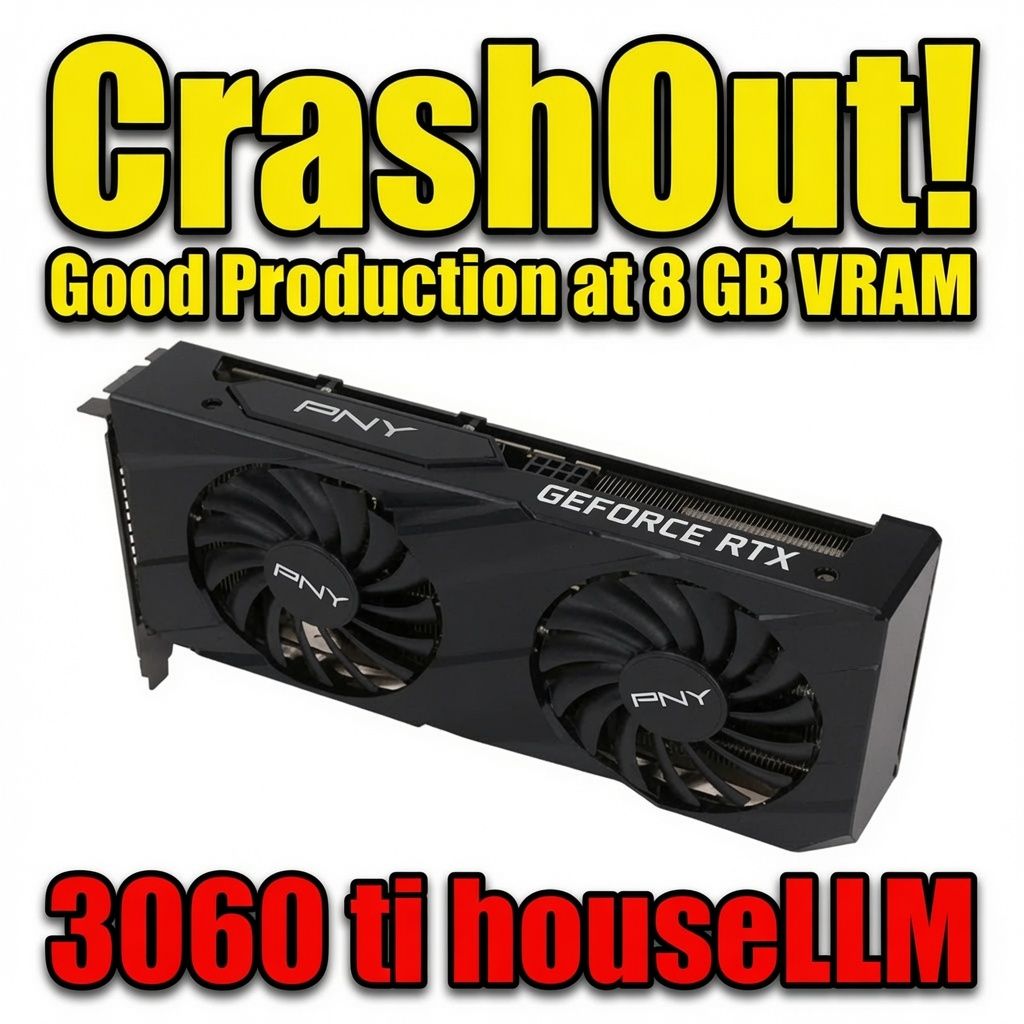
The research and work this requires is incredibly complex, and you can follow the rapid developments as these world-class LLM's break through. You can follow and study this work and the incredible work that goes into these:
TheTomAgain a giant thank-you to Tom. This kind of opensource software will shape the world!